

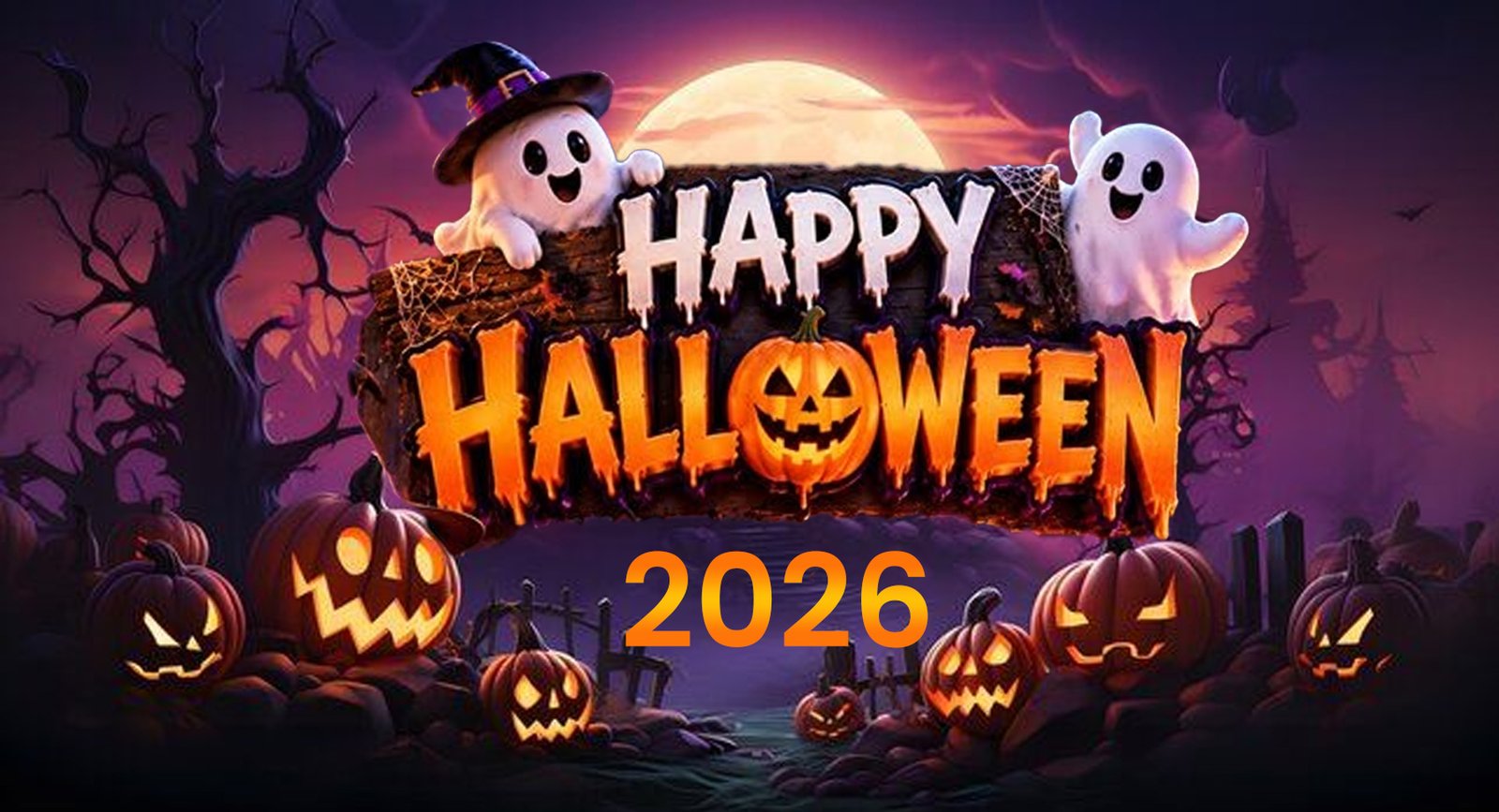
Halloween is a popular festival
celebrated around the world every year on October 31. The festival is
associated with spooky costumes, glowing pumpkins, ghosts, witches, haunted
houses, and traditions such as trick-or-treating. Halloween is especially popular
in the United States, Canada, Ireland, and the United Kingdom. Today,
Halloween-themed parties and events are also organised in India and several
other countries.
In 2026, Halloween will be
celebrated on Saturday, October 31. On this day, people wear different
costumes, decorate their homes, children collect candies, and families and
friends enjoy festive activities together. However, Halloween is not limited to
costumes and candy. Its history is also connected to ancient Celtic traditions,
seasonal changes, and Christian religious observances.
Halloween
2026 Date and Important Details
Halloween is observed every year
on the last day of October, which is October 31. The date remains fixed, but
the day of the week changes each year.
• Festival
Name: Halloween
• Halloween Date 2026: Saturday, October
31, 2026
• Common Name: All Hallows' Eve
• Main Colours: Orange, black, purple, and
green
• Popular Activities: Costume parties,
trick-or-treating, pumpkin carving, and haunted attractions
• Main Countries: United States, Canada,
Ireland, the United Kingdom, and Australia
Halloween is generally not a
public holiday. Therefore, schools, offices, and businesses in most countries
continue to operate according to their regular schedules, although special
events and parties may be organised around October 31.
What is
Halloween and Why we celebrate it ?
Halloween is a cultural festival
with historical connections to the end of the harvest season, the beginning of
winter, and traditions associated with remembering the dead In ancient times,
people did not have the same scientific understanding or modern lighting
facilities that we have today. The beginning of winter and the shorter days
were considered important seasonal transitions. Celtic communities also
believed that, during this time of the year, the connection between the living
and the spirit world could become stronger. Against this background, people
traditionally lit bonfires, wore disguises, and gathered for community
celebrations. Over time, different cultural and religious traditions influenced
one another, leading to the development of modern Halloween.
Today, the main reasons for
celebrating Halloween are entertainment, creativity, social gatherings, and
community participation. People enjoy spooky themes, organise fun activities
for children, and decorate their homes with Halloween-themed decorations. It is
also important to understand that not everyone who celebrates Halloween
believes in spirits or supernatural phenomena. Many people simply enjoy it as a
fun cultural occasion.
Halloween: History and Origin
Halloween's history is linked to the ancient
Celtic festival Samhain, which was observed around 2,000 years ago in regions
including present-day Ireland and Scotland. It marked the end of the harvest
season and the beginning of winter. People lit bonfires and followed
traditional beliefs associated with spirits. Later, Halloween became connected
with Christian traditions. All Hallows' Eve, the evening before All Saints'
Day, gradually became known as Halloween. During the 19th century, Irish and
Scottish immigrants brought Halloween traditions to North America. Over time, costume
parties, pumpkin carving, and trick-or-treating became popular, turning
Halloween into a major cultural celebration.
Main
Halloween Rituals and traditions
Halloween traditions combine
historical customs with modern entertainment activities
1.
Trick-or-Treating
Trick or treating is one of
Halloween's most popular traditions. Children dress up as ghosts, witches,
superheroes or their favourite characters and visit houses to collect candies
and chocolates. This custom is linked to medieval European practices like
souling and guising.
2. Pumpkin
Carving and Jack-o-Lanterns
Pumpkin carving involves creating
scary or creative faces on pumpkins and placing lights inside them. The
tradition is associated with the Irish folklore of Stingy Jack. While turnips
were traditionally carved in Ireland and Scotland, pumpkins became popular in
North America.
3. Haunted
Houses and Spooky Decorations
During Halloween, homes, malls,
and entertainment venues are decorated with spooky themes. Artificial cobwebs,
skeletons, bats, ghosts, and dark lighting create a scary atmosphere. Some
places also set up haunted houses where visitors experience frightening scenes,
sound effects, and unexpected surprises. These activities have become a popular
part of modern Halloween celebrations, but participating in them is entirely
optional.
4. Bonfires
and Community Gatherings
Bonfires have historical
connections to ancient Samhain celebrations and certain regional traditions. In
the past, fires were an important part of seasonal gatherings in some
communities. Today, bonfires and outdoor events are organised in some regions during
Halloween. These gatherings bring people together to celebrate the occasion,
although bonfires are not a standard Halloween tradition everywhere. They
should always be conducted while following local safety rules.
Conclusion:
Halloween 2026 Will Be Celebrated on October 31
Halloween 2026 will be celebrated
on Saturday, October 31 . With historical roots linked to the ancient Celtic
festival Samhain and influences from Christian observances, Halloween has
become popular in countries such as the United States, Canada , Ireland , the
United Kingdom and Australia. Trick-or-treating, pumpkin carving, coustumes,
haunted houses and Halloween parties are among its most popular traditions. In
India, Halloween- themed events and creative celebrations are also gaining the
attention , although Hallloween is not a traditional Indian festival. Halloween
allows people to express their creativity, spend time with family and friends
and enjoy spooky - themed entertainment. Its history and traditions show how
the festival has evolved over centuries through different cultural influences.
Discussion & Comments (0)
No comments yet. Be the first to share your thoughts on this story!
Leave a Comment