

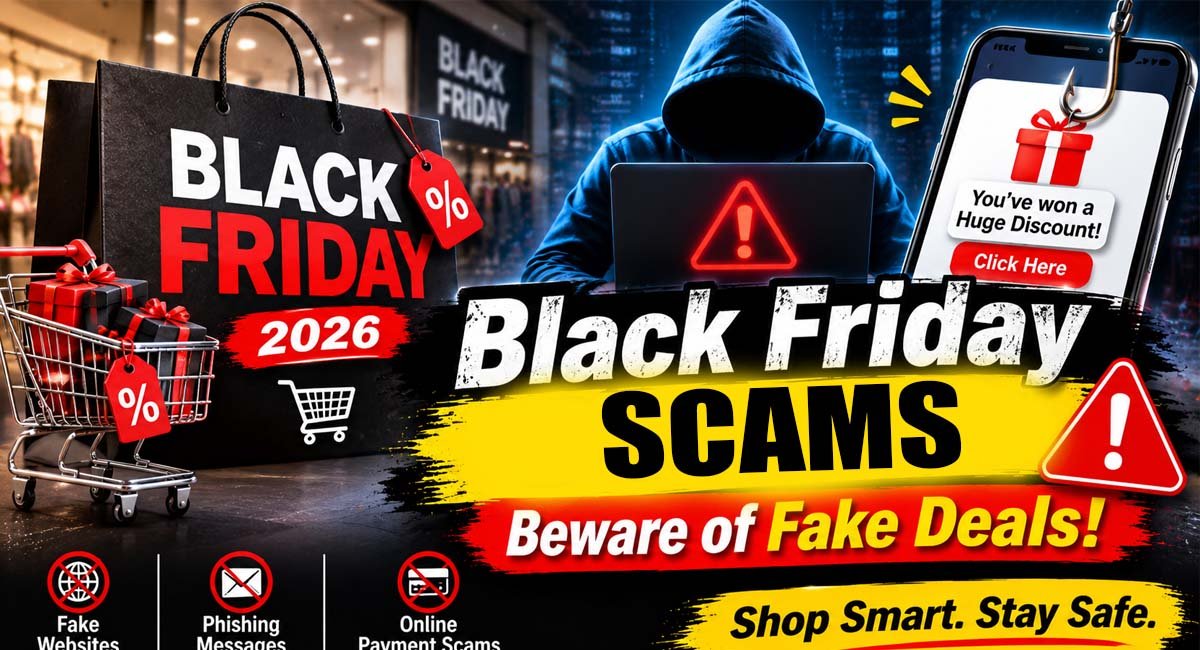
Black Friday is known for major discounts on electronics, fashion, home appliances and other popular products. In 2026, the shopping event falls on November 27, with several retailers already running promotional campaigns ahead of the main sale.
However, the growing number of online shopping offers also
creates opportunities for cybercriminals. Fake shopping websites, misleading
advertisements, fraudulent emails and payment requests can make it difficult
for shoppers to separate genuine discounts from scams.
According to a November 19, 2026 report by Bitdefender, half
of the Black Friday-themed spam emails observed by its Antispam Lab between
October 30 and November 10 were identified as scams. The report also
highlighted fraudulent social media advertisements and fake online stores
impersonating popular brands.
For shoppers planning their purchases, Khabri Chachi has
also covered the Black
Friday 2026 sale dates and early deals from major US retailers. Knowing
which retailers are running genuine promotions can help buyers compare offers
and avoid suspicious deals.
With shoppers looking for limited-time discounts,
understanding these scams has become an important part of shopping safely
online.
How Black Friday Scams Are Targeting Online Shoppers
Scammers often copy the appearance of genuine retail
promotions. They use familiar brand names, product photographs, discount
banners and urgent messages to make fraudulent offers look convincing.
Some websites advertise expensive electronics, branded
clothing or luxury products at unusually low prices. Once shoppers place an
order and submit their payment details, they may receive counterfeit products,
incorrect items or nothing at all.
Bitdefender's 2026 investigation identified campaigns using
well-known brand identities without permission. Some fraudulent advertisements
directed shoppers towards fake stores promising discounts of up to 90%.
The important thing to remember is that a
professional-looking advertisement or website does not automatically mean that
the seller is genuine.
Fake Emails, SMS and Social Media Shopping Advertisements
Fraudulent promotional messages are among the common ways
scammers attract potential buyers during the Black Friday season.
An email might claim that a popular retailer is offering an
exclusive discount on smartphones or luxury products. Another message may
promise a free gift card, shopping voucher or special reward for completing a
short registration.
SMS scams follow a similar approach. Shoppers may receive
messages claiming that a limited-time offer is about to expire or that they
have been selected for a special shopping reward.
Social media creates another opportunity for these scams.
Fraudulent advertisements can use familiar company logos, professional product
photographs and attractive prices to gain attention.
Some warning signs include:
- Unexpected
messages offering unusually large discounts.
- Links
directing users to unfamiliar shopping websites.
- Prize
notifications asking for personal or banking information.
- Advertisements
using slightly different spellings of established brand names.
- Messages
creating pressure to purchase immediately.
Before responding to any promotional message, visit the
retailer's official website or app independently rather than following an
unfamiliar link.
How Payment Fraud and Phishing Scams Work
Phishing is a technique in which scammers impersonate
trusted companies to collect sensitive information. During Black Friday, these
messages may appear to come from shopping platforms, payment services or
delivery companies.
For example, a shopper might receive a message claiming that
an online order has failed because of a payment problem. The message includes a
link asking the customer to update card details or verify their account.
The link may open a fake payment page designed to collect
card numbers, passwords, banking information or one-time passwords (OTPs).
Another approach involves fake payment confirmation pages.
Shoppers may be asked to enter additional information to complete an order,
even though the website is not operated by the retailer it claims to represent.
Indian shoppers using UPI should also remember that entering
a UPI PIN authorises a payment. It is not required to receive money. Never
enter your PIN simply because someone claims they are sending you a refund or
cashback.
The National Payments Corporation of India (NPCI) provides
additional information about these risks through its official fraud awareness
guidelines.
6 Ways to Identify a Fake Black Friday Shopping Website
A fraudulent shopping website may look similar to a genuine
online store. However, a few checks can help identify suspicious sellers before
making a purchase.
1. Examine the Website Address
Check the spelling of the website carefully. Fraudulent
websites sometimes add extra letters, numbers or words to a familiar brand
name.
For example, a website may use a slightly modified version
of a retailer's official domain to confuse visitors.
2. Be Careful With Extremely Low Prices
A premium smartphone or luxury product advertised at a
fraction of its normal price deserves additional verification.
Compare the offer with prices listed on the retailer's
official website and other established shopping platforms.
3. Check Contact and Business Information
Look for the seller's contact details, customer support
information and business address.
Missing information, copied descriptions or incomplete
website pages can be warning signs.
4. Read Customer Reviews Carefully
Search for the seller's name along with terms such as
"scam", "complaint" or "customer reviews".
Do not depend entirely on testimonials displayed on the
seller's own website. Check independent sources as well.
5. Read the Return and Refund Policy
A genuine retailer should clearly explain its return
conditions, refund process, delivery charges and customer support options.
Be cautious when these policies are missing, confusing or
copied from unrelated websites.
6. Do Not Depend Only on HTTPS
A website displaying HTTPS and a padlock symbol has an
encrypted connection. However, this does not prove that the business operating
the website is genuine.
Fraudulent websites can also use HTTPS certificates.
How to Keep Your Payments Secure During Black Friday
Sales
Checking the seller is only one part of online shopping
security. Payment habits also matter.
Whenever possible, use a payment method that provides a way
to dispute unauthorised or incorrect transactions. Credit cards may offer
additional dispute protections, depending on the country and card issuer.
Indian shoppers should use trusted banking apps and payment
gateways. Avoid transferring money directly to unknown sellers outside
established shopping platforms.
A few additional precautions can make online transactions
safer:
- Never
share your OTP, UPI PIN, card PIN or banking password.
- Avoid
making payments through unfamiliar QR codes.
- Do
not install unknown applications suggested by a seller or customer support
representative.
- Enable
transaction notifications from your bank.
- Use
strong, unique passwords for shopping accounts.
- Enable
two-factor authentication wherever available.
- Keep
your browser, mobile applications and operating system updated.
If a payment page requests information unrelated to the
purchase, stop and verify the transaction through the retailer's official
customer support channel.
Refund and Return Scams: Another Risk After Shopping
Online shopping scams do not always end after a customer
makes a payment. Fraudsters may also target people who are trying to cancel an
order, return a product or receive a refund.
In one common approach, scammers impersonate customer
support representatives and claim that a refund is waiting to be processed.
They may send a suspicious link or ask the customer to scan a QR code to
receive the money.
Another method involves fake refund assistance. Someone
contacts the shopper and promises to recover money lost through a fraudulent
purchase, but demands an advance processing fee or sensitive banking
information.
To avoid these situations, always initiate returns through
the official shopping platform. Check the order status inside your account
rather than trusting an unexpected message.
Remember these precautions:
- Never
pay an additional fee to an unknown person to release a promised refund.
- Do
not share your UPI PIN or OTP to receive money.
- Avoid
clicking refund links received through unsolicited messages.
- Never
give remote access to your phone or computer to an unknown customer
support representative.
- Keep
order confirmations, payment receipts and return-related communication.
The US Federal Trade Commission (FTC) also warns consumers
about refund and recovery scams in its official
consumer guidance.
What Should You Do If You Fall for a Black Friday Scam?
If you accidentally make a payment through a fraudulent
website or share your banking details with a scammer, taking action quickly is
important.
First, contact your bank or payment service provider through
its official customer support channel. Explain what happened and ask whether
the transaction can be stopped, disputed or investigated.
If your card details or banking credentials have been
exposed, ask your bank about blocking the affected card or securing your
account. Change compromised passwords and review recent transactions for
unfamiliar activity.
For shoppers in India, financial cyber fraud can be reported
through the national cybercrime helpline 1930 or the National Cyber Crime Reporting Portal.
The Indian government's Indian Cyber Crime Coordination
Centre (I4C) operates this reporting system to help people report cybercrime
incidents, including financial fraud.
Keep screenshots, transaction IDs, payment receipts,
suspicious website addresses and messages as evidence when reporting the
incident.
Black Friday discounts may last for a limited time, but
there is no reason to rush into a purchase without checking the seller. A few
minutes spent verifying a website, promotional message and payment request can
help prevent a shopping deal from turning into a financial loss.



Discussion & Comments (0)
No comments yet. Be the first to share your thoughts on this story!
Leave a Comment