

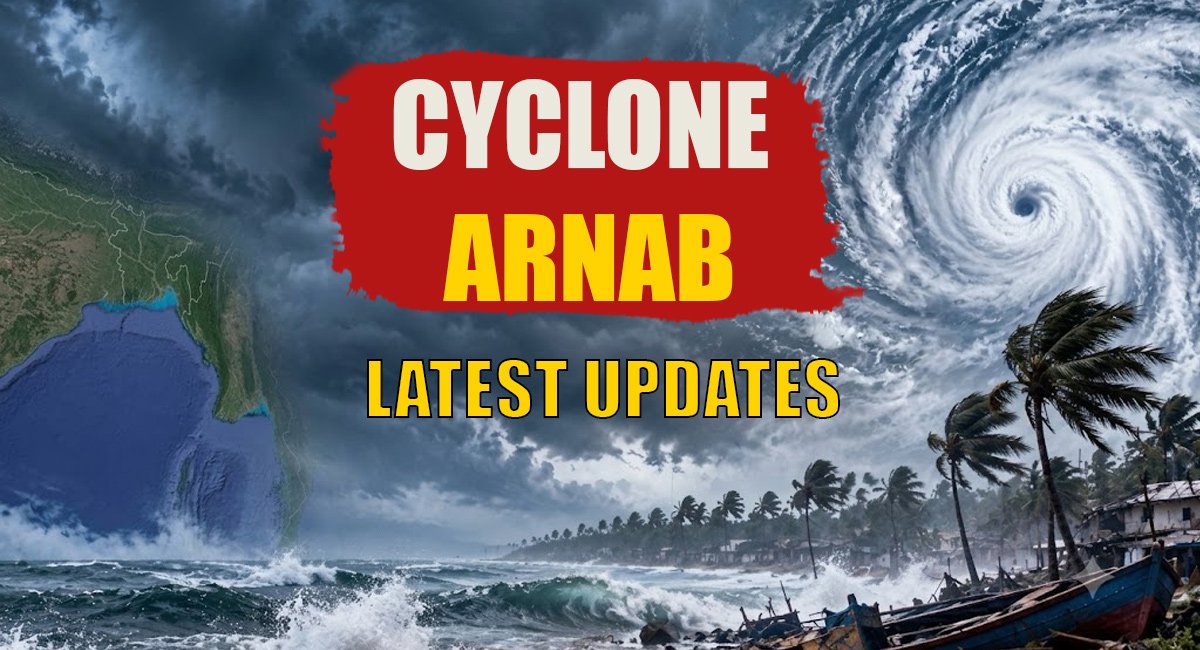
Cyclone Arnab is moving towards the Andhra Pradesh coast and is expected to make landfall on October 28. The storm may bring strong winds and heavy rain to coastal areas. Odisha is also likely to receive very heavy rainfall, while Kerala and Tamil Nadu have separate rain warnings.
According to the India Meteorological Department (IMD),
winds could reach 125 kmph, with gusts of up to 140 kmph when the cyclone
crosses the coast. People living in affected areas have been advised to follow
weather updates and stay alert.
Cyclone Arnab May Hit Andhra Pradesh on October 28
The IMD expects Cyclone Arnab to cross the Andhra Pradesh
and Yanam coasts between Bapatla and Visakhapatnam by the morning of October
28.
The storm is expected to become stronger as it moves across
the Bay of Bengal. Coastal areas could face strong winds, rough seas and heavy
rainfall.
The IMD has warned that some low-lying coastal areas may
also face a risk from rising sea water during landfall. People living near the
coast should follow instructions from local authorities.
Read the official
IMD cyclone bulletin for the latest forecast.
Heavy Rain Warning for Andhra Pradesh
Heavy rain is expected in several parts of coastal Andhra
Pradesh as the cyclone approaches.
The IMD has forecast extremely heavy rainfall on October 27
and 28. Heavy rain may continue in some areas on October 29.
Intense rainfall can lead to waterlogging, flooding and
problems with road travel. Strong winds may also affect trees, electricity
lines and other structures.
People should avoid flooded roads and stay away from the sea
during dangerous weather. Fishermen should follow official instructions before
going out to sea.
Check the IMD
weather warning for Coastal Andhra Pradesh.
Odisha May Receive Extremely Heavy Rain
Odisha is also expected to see heavy rain due to the
approaching cyclone.
According to the IMD forecast, very heavy rainfall is likely
on October 27. Extremely heavy rain is expected in parts of the state on
October 28, followed by very heavy rain on October 29.
Heavy rainfall may affect daily travel and cause
waterlogging in low-lying areas. People should keep checking district-level
weather alerts and follow any safety instructions issued by local officials.
Read the official
IMD warning for Odisha.
Kerala Weather Update
Kerala has a separate rain warning for October 26 and 27.
The IMD has forecast very heavy rainfall on October 26, with
heavy rain likely on October 27. Rainfall may vary from one district to
another.
People should be careful while travelling during heavy rain.
Those living in areas that are prone to flooding or landslides should pay
attention to local warnings.
Check the IMD
weather forecast for Kerala.
Tamil Nadu Rain Forecast
Tamil Nadu and Puducherry may also receive heavy rain.
The IMD has forecast very heavy rainfall on October 26 and
heavy rainfall on October 27. Thunderstorms and lightning are also possible in
some places.
People should avoid standing in open areas during lightning
and should check the weather before making travel plans.
Read the official
IMD warning for Tamil Nadu and Puducherry.
How to Stay Safe During Cyclone Arnab
People in areas that may be affected should take a few
simple precautions.
- Follow
the latest updates from the IMD
- Keep
your phone charged and essential medicines ready
- Stay
away from the sea during rough weather
- Avoid
walking or driving through flooded roads
- Keep
away from fallen electric wires
- Follow
evacuation instructions from local authorities
Do not depend on old social media posts for weather updates.
The cyclone's path and intensity may change, so fresh information is important.
What Happens Next?
Cyclone Arnab is expected to reach the Andhra Pradesh coast
on October 28, with strong winds and heavy rain possible around landfall.
Odisha may also receive extremely heavy rain, while Kerala and Tamil Nadu have
separate rainfall warnings.
The situation may change as the storm moves closer to land.
Residents should continue to follow official weather updates and local safety
advice.
For the latest information, visit the India Meteorological Department website.



Discussion & Comments (0)
No comments yet. Be the first to share your thoughts on this story!
Leave a Comment