

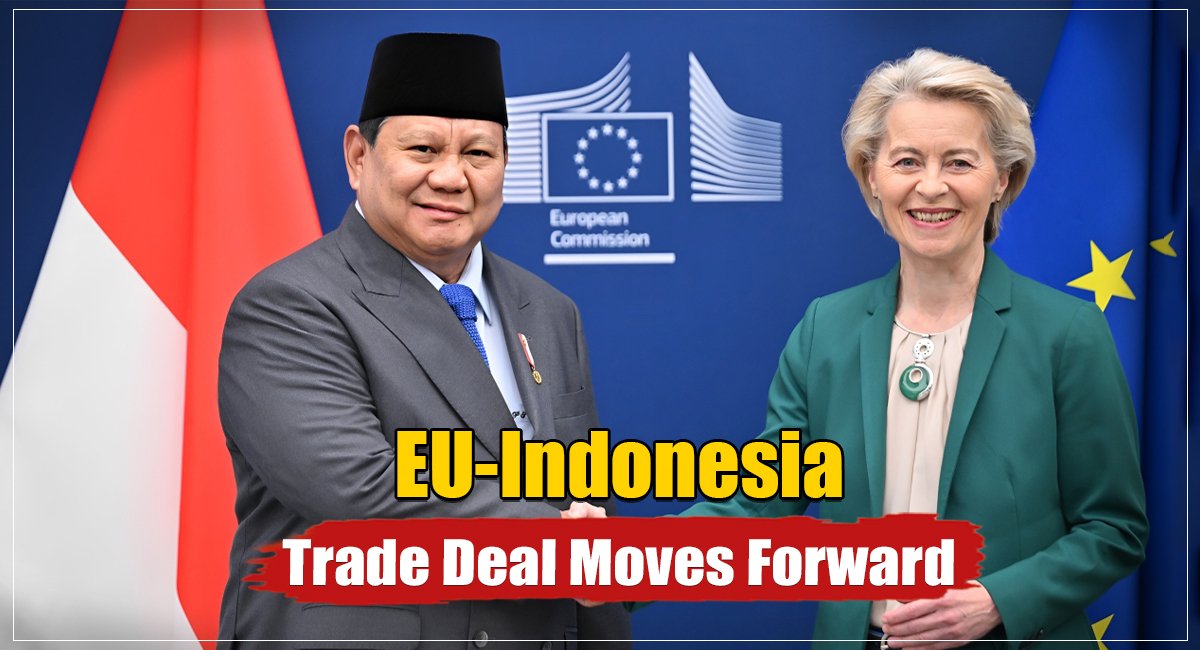
The European Union has moved closer to signing two major trade and investment agreements with Indonesia, a development that could reduce import costs and create new opportunities for businesses in both markets.
On November 18, 2026, the Council of the European Union
authorised the signing and provisional application of the Comprehensive
Economic Partnership Agreement (CEPA) and the Investment Protection Agreement
(IPA).
The agreements aim to improve market access, reduce import
duties and strengthen economic cooperation between Europe and Southeast Asia.
According to the Council, the trade deal could liberalise up to 98.5% of tariff
lines and help EU businesses save approximately €600 million annually in
customs duties.
The timing is particularly important for Indonesia, which is
scheduled to lose its preferential tariff access under the EU's Generalised
Scheme of Preferences (GSP) from January 1, 2027.
However, the agreements are not yet operational. Both sides
must complete the required procedures before provisional application can begin.
What Are the EU-Indonesia Trade and Investment
Agreements?
The agreements consist of two separate arrangements designed
to address different aspects of economic cooperation.
The Comprehensive Economic Partnership Agreement (CEPA)
focuses on trade. It aims to reduce import duties, improve access to goods and
services markets and simplify trade procedures.
It also covers public procurement, digital trade,
intellectual property, energy and raw materials. These provisions are intended
to make it easier for companies to sell products and expand their operations
across both markets.
The Investment Protection Agreement (IPA) focuses on
protecting investments made by European businesses in Indonesia and Indonesian
businesses in Europe.
It includes safeguards against unlawful expropriation,
guarantees of fair treatment and provisions covering investment-related
payments. Both sides will also retain the right to introduce regulations for
legitimate public interests, including environmental protection and public
health.
Together, the agreements are intended to provide businesses
with clearer trade rules and a more predictable investment environment.
How Much Could Businesses Save From Lower Import Duties?
Reducing import duties is one of the biggest expected
benefits of the CEPA.
Once fully implemented, the agreement is expected to
liberalise up to 98.5% of tariff lines. The Council also states that 96% of
Indonesian tariffs will disappear within five years.
The European Union estimates that its businesses could save
around €600 million annually in customs duties on products entering Indonesia.
These savings could make European exports more competitive
in the Indonesian market. Indonesian exporters could also benefit from improved
access to European customers under the agreement.
However, tariff reductions will follow agreed schedules
rather than taking effect across all products immediately. Some sensitive goods
will continue to face restrictions or limited quotas.
European Automobile Exports Could Become More Competitive
The automotive industry is among the sectors expected to
benefit from the agreement.
Indonesia currently imposes import duties of up to 50% on
certain European automobile imports. Under the CEPA, these duties are scheduled
to be eliminated within five years.
Lower import costs could make European vehicles more
competitive and give manufacturers additional opportunities in Southeast Asia.
The agreement could also benefit companies involved in
vehicle components, machinery and related manufacturing.
For Indonesian consumers, reduced import duties may
eventually improve access to European vehicles. However, lower tariffs do not
guarantee an immediate fall in showroom prices. Shipping, taxes, distribution
expenses and local market conditions will continue to affect the final cost.
Agricultural and Food Products Will Get Better Market
Access
Agriculture is another important part of the agreement.
The EU currently exports approximately €1 billion worth of
agricultural and food products to Indonesia annually. Under the CEPA, import
duties on most European agricultural exports are expected to be removed.
The products covered include dairy items, meat, processed
foods, fruits and vegetables.
The agreement will also protect 221 European geographical
indications (GIs) in Indonesia. These designations identify products associated
with specific regions and help protect their reputation and authenticity.
However, not every agricultural product will receive
duty-free access. Rice, sugar and ethanol are excluded from tariff
liberalisation, while certain other sensitive products will remain subject to
limited tariff-rate quotas.
These exceptions allow both sides to protect selected
agricultural industries while opening other parts of the market.
Pharmaceuticals, Textiles and Manufacturing Could Also
Benefit
The potential benefits extend beyond automobiles and food
products.
European exporters in pharmaceuticals, chemicals, textiles,
footwear, machinery and electrical equipment could gain from reduced trade
barriers.
Indonesia is an important market for European businesses
because of its population of more than 280 million people and its position as
Southeast Asia's largest economy.
The CEPA also aims to improve access to services and public
procurement opportunities. Its digital trade provisions could support
cross-border business activities, while stronger intellectual property
protections may provide additional confidence to companies operating in both
markets.
Indonesian exporters could also gain from improved access to
European buyers, although the actual benefits will depend on product
requirements, tariff schedules and market demand.
Why January 1, 2027, Matters for Indonesia
The agreement comes at an important time for Indonesia
because its preferential access under the EU's Generalised Scheme of
Preferences is scheduled to end on January 1, 2027.
The GSP is an EU trade arrangement that provides eligible
developing countries with reduced or zero import duties on selected products
entering the European market.
Indonesia's graduation from the scheme means its exports
will no longer receive those preferential tariffs from that date.
This could increase import costs for Indonesian products
that currently benefit from GSP preferences.
The CEPA is expected to establish a broader trade framework
between the two sides. However, the timing of its provisional application will
be important for businesses preparing for the transition.
Both the EU and Indonesia want to move forward quickly to
reduce the possibility of disruption to existing trade relationships.
What Happens Before the Agreement Becomes Operational?
The Council's November 18 decision authorised the signing
and provisional application of the two agreements. It did not mean that the
agreements had already entered into operation.
The next steps include formal signing by the EU and
Indonesia, followed by submission to the European Parliament for its consent.
Both sides must also complete their respective internal
procedures and notify each other before provisional application can begin.
The Council will then need to complete the relevant
procedures for formal conclusion and full entry into force.
Provisional application is important because it can allow
agreed parts of the arrangements to operate before all the requirements for
full entry into force have been completed.
For now, businesses cannot assume that the new tariff
benefits are already available.
Why the Deal Matters Beyond Europe and Indonesia
The agreement is part of the European Union's wider effort
to strengthen trade partnerships in the Indo-Pacific region and diversify its
supply chains.
For European companies, Indonesia offers access to a large
consumer market and opportunities in manufacturing, agriculture, automotive
production and services.
For Indonesia, closer economic ties with Europe could
support exports, attract investment and create opportunities for local
industries.
The agreements also include cooperation on energy, critical
raw materials, environmental protection and labour rights. This makes the
partnership broader than a conventional tariff-reduction arrangement.
The next major milestone will be the formal signing and
completion of the procedures needed for provisional application. Until then,
the expected savings and improved market access remain future benefits rather
than changes businesses can use immediately.


Discussion & Comments (0)
No comments yet. Be the first to share your thoughts on this story!
Leave a Comment